EIA: U.S. gasoline refinery yield averaged below 45% in January–August
EIA's November 5 analysis uses monthly data through August and identifies a shift toward distillate and jet fuel; yield is not utilization or absolute output.
The story explained
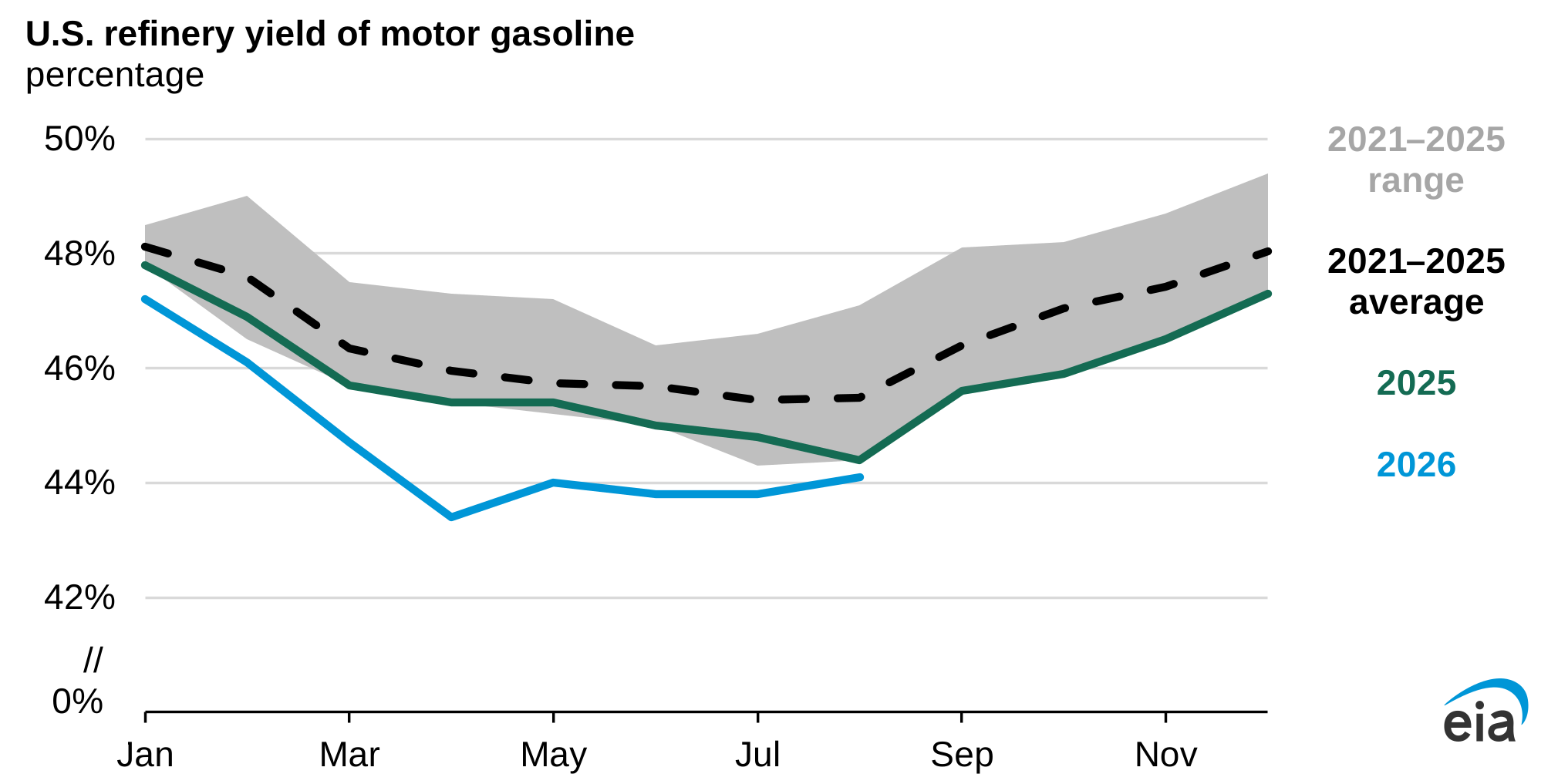
The U.S. Energy Information Administration published its refinery product-mix analysis on November 5, 2026 using Petroleum Supply Monthly data through August. Average gasoline yield was below 45% during January–August, and every month fell below the corresponding 2021–2025 five-year range.
Yield measures the share of a particular fuel produced from crude processing. EIA describes typical U.S. gasoline yields of around 45%–50%, while gasoline, distillate fuel oil and kerosene-type jet fuel together generally account for about 85%–90%. These percentages are not refinery utilization rates or daily barrel volumes.
EIA attributes the shift toward middle distillates to relatively attractive margins associated with constrained global distillate and jet-fuel supply. Distillate yields exceeded their five-year average in every month of the period. Average jet-fuel yield first surpassed 12% in March and remained at or above that level through August.
The analysis concerns operation and product mix at existing refineries. It does not announce new refining projects or equipment purchases. The original EIA gasoline-yield chart retains percentage and month axes and historical comparison bands; its 2026 observations stop in August and should not be read as November operating data.
Why it matters
Editorial analysis: Product-mix changes provide operating context but are not, by themselves, evidence of plant expansion, valve replacement or new procurement.
Relevant toValve, pump and process-control manufacturers; EPC and operating teams
What to watch next
Watch subsequent monthly data, refining margins and formal maintenance or retrofit announcements.
These are research prompts, not announced tenders or confirmed subsequent developments.
U.S. Energy Information Administration (EIA)
Refineries have shifted production away from gasoline to middle distillates
This is an independently written summary and analysis, not an official translation. Project plans and status may change.